Paper
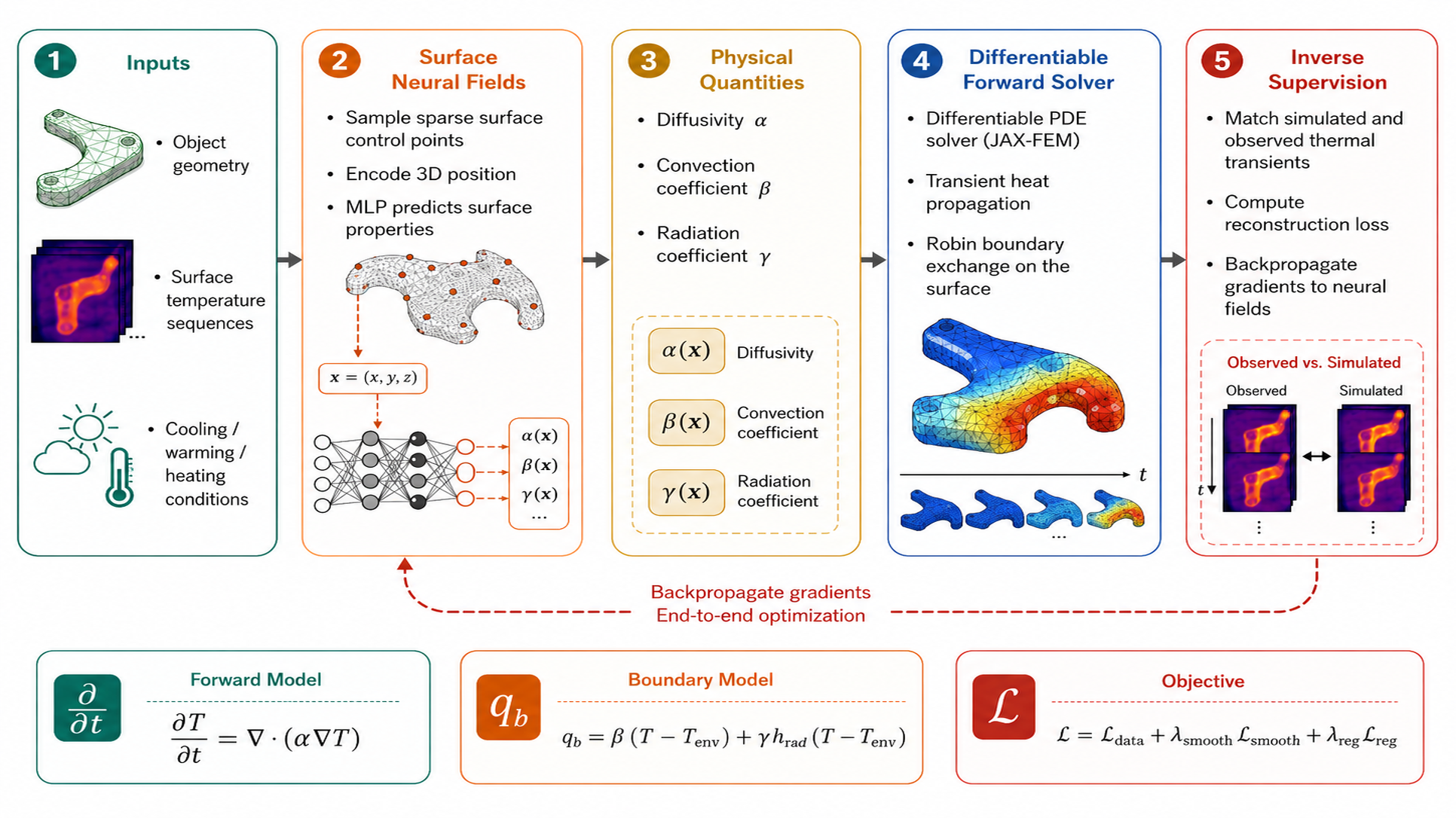
Beyond Thermal Imaging: Inferring Thermophysical Properties from Time-Resolved Thermal Observations
PhD Candidate | EPFL
“Anything one man can imagine, other men can make real.” — Jules Verne
I am currently pursuing my Ph.D. at École Polytechnique Fédérale de Lausanne (EPFL), Switzerland, under the supervision of Prof. Olga Fink and in close collaboration with Schindler. Before this, I completed my M.Sc. in Robotics at Delft University of Technology (TU Delft), the Netherlands, and a B.Eng. in Mechanical Engineering with distinction from Southern University of Science and Technology, China.
During my master's studies, I worked on robust dynamic visual SLAM systems and realistic simulations of dynamic environments with Prof. Aamir Ahmad at the Max Planck Institute for Intelligent Systems, Tübingen, Germany.
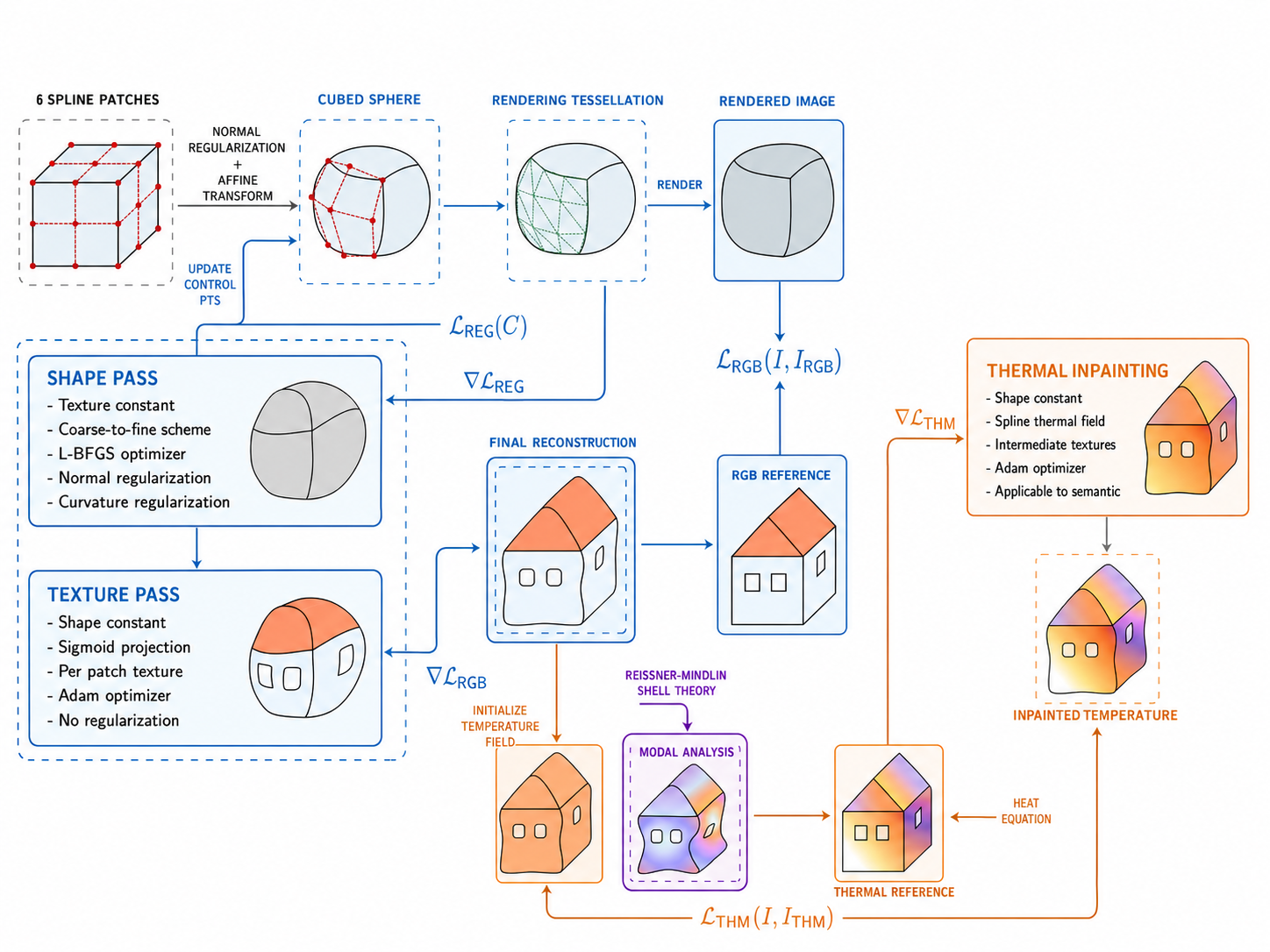
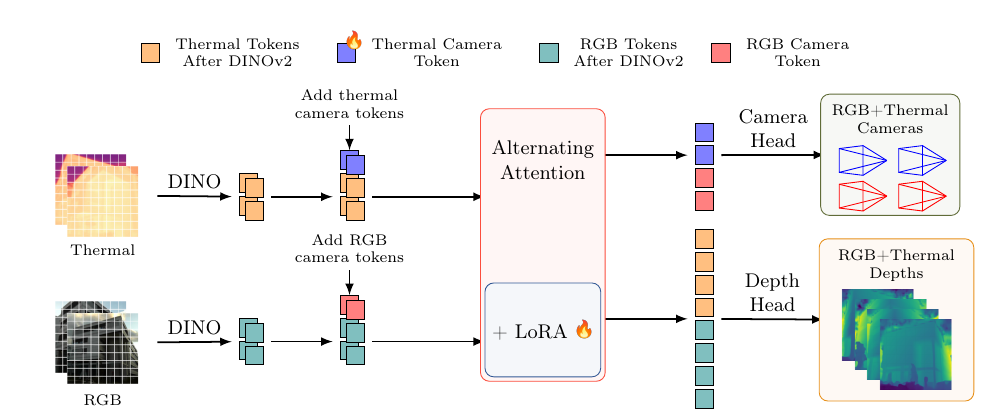
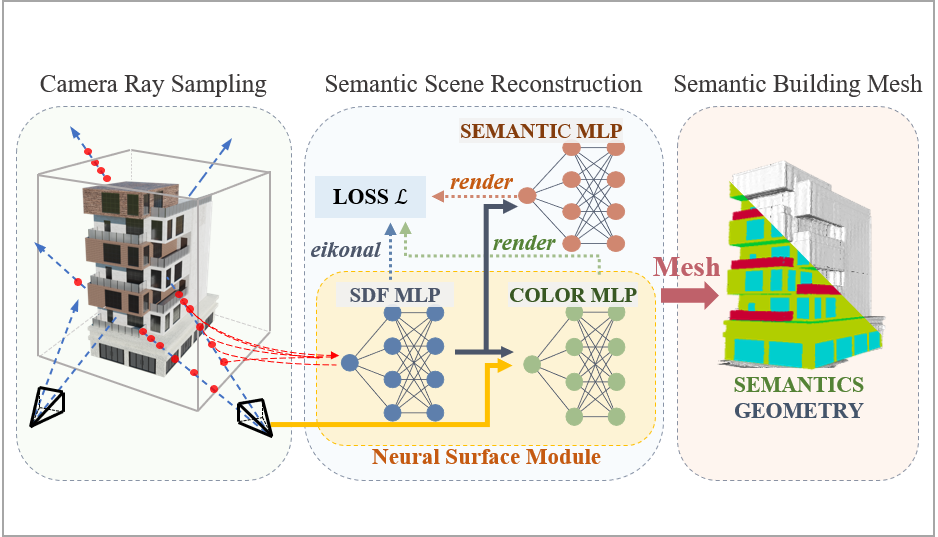
Inspired by the fantasies of Jules Verne and Isaac Asimov, I am captivated by the elegance of intelligent systems, which propels me to explore the intersection between the physical world and artificial intelligence. My current research lies in 3D vision and scene reconstruction, with a particular focus on multimodal physical scene reconstruction for building assessment and renovation.
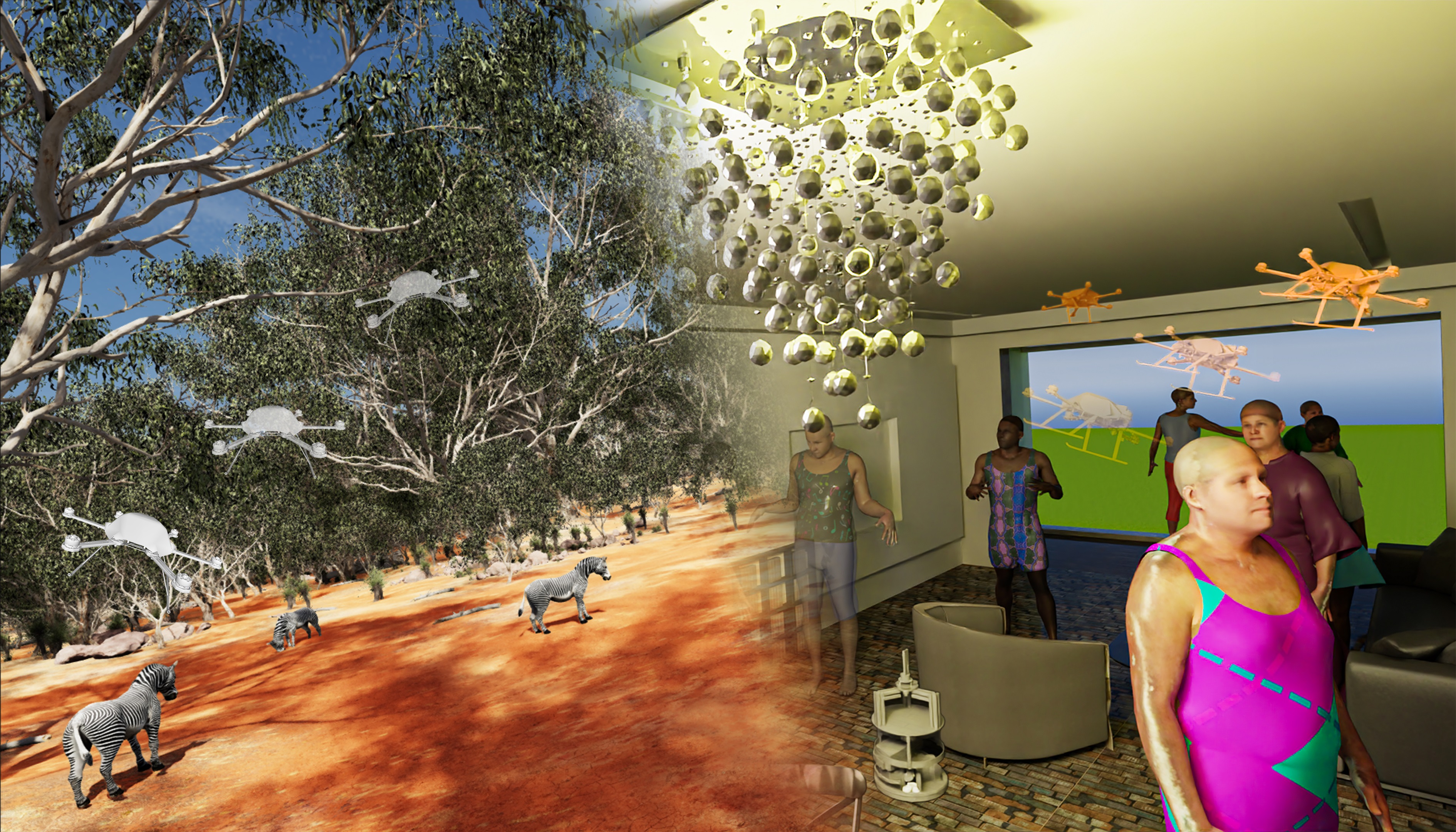
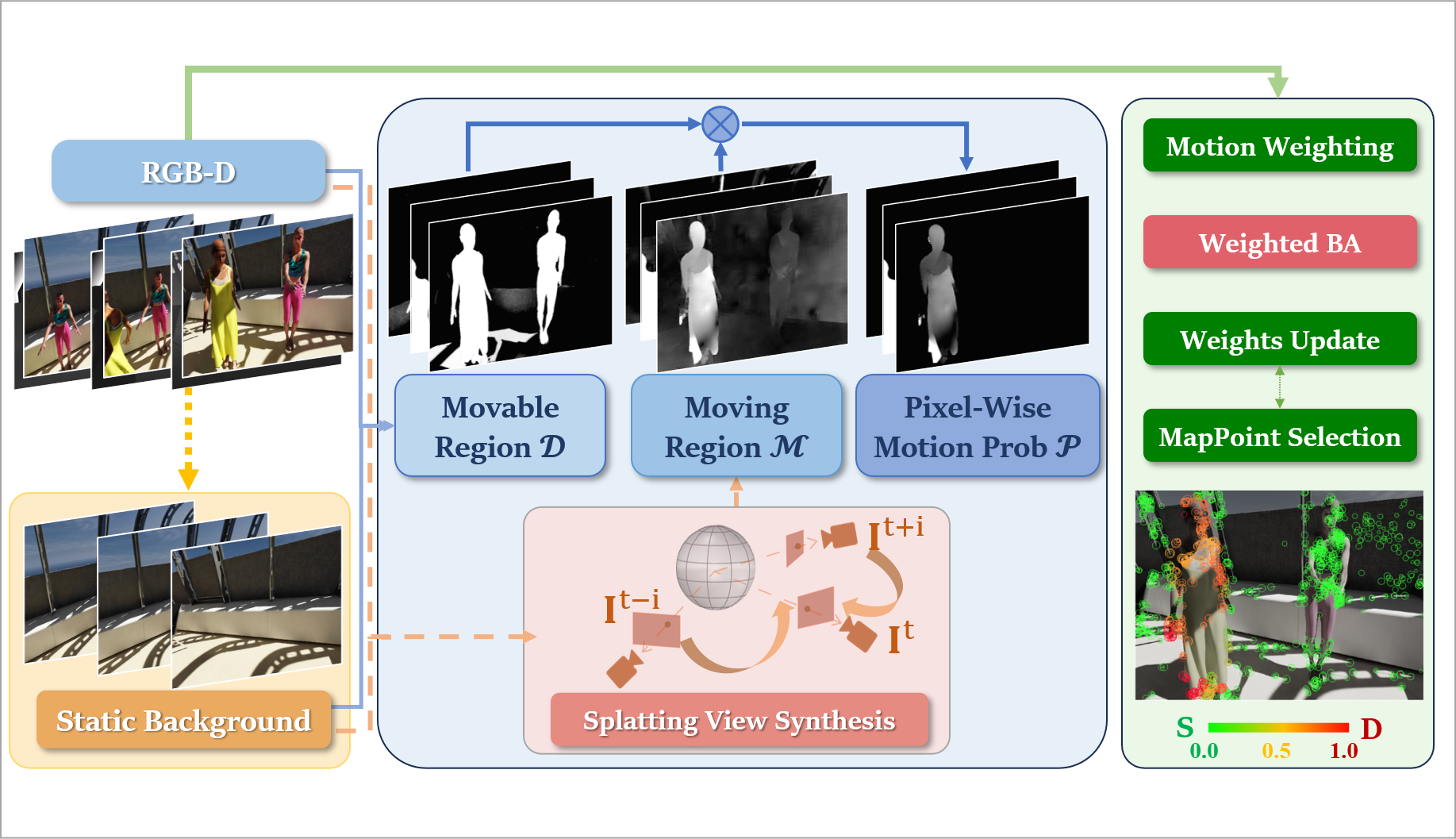
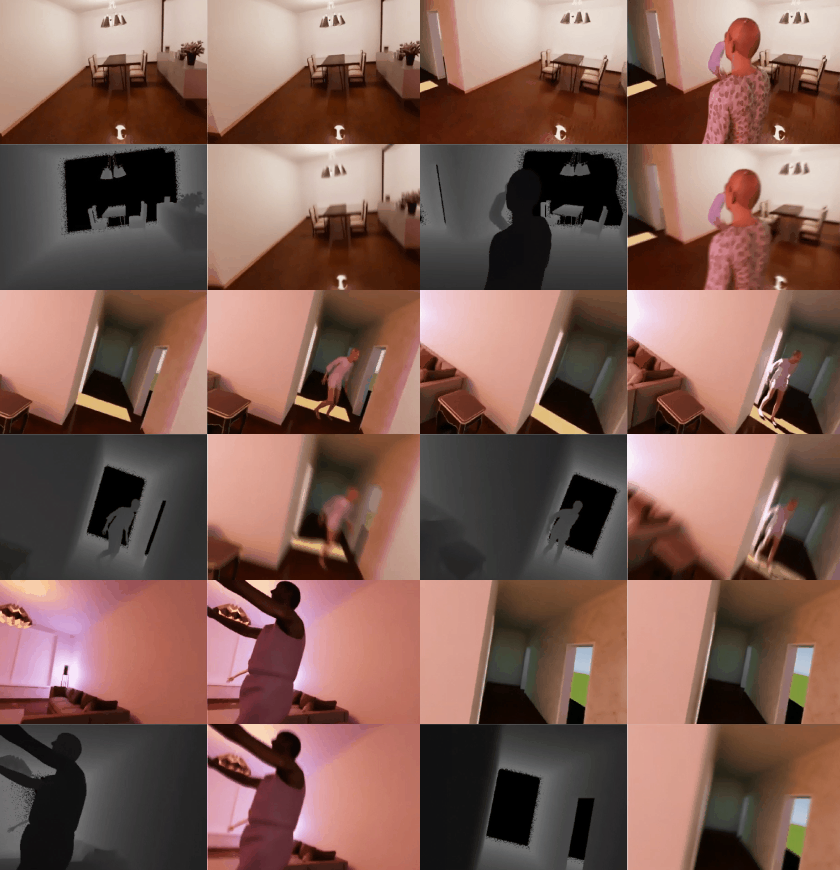
With GRADE framework we generate photorealistic indoor environment datasets consisting of static/dynamic scenarios and extended assets (motion blur, sensor noise, etc.). Generated data has been extensively tested on various SLAM frameworks and typical detection/segmentation libraries to prove usability and improved performance.
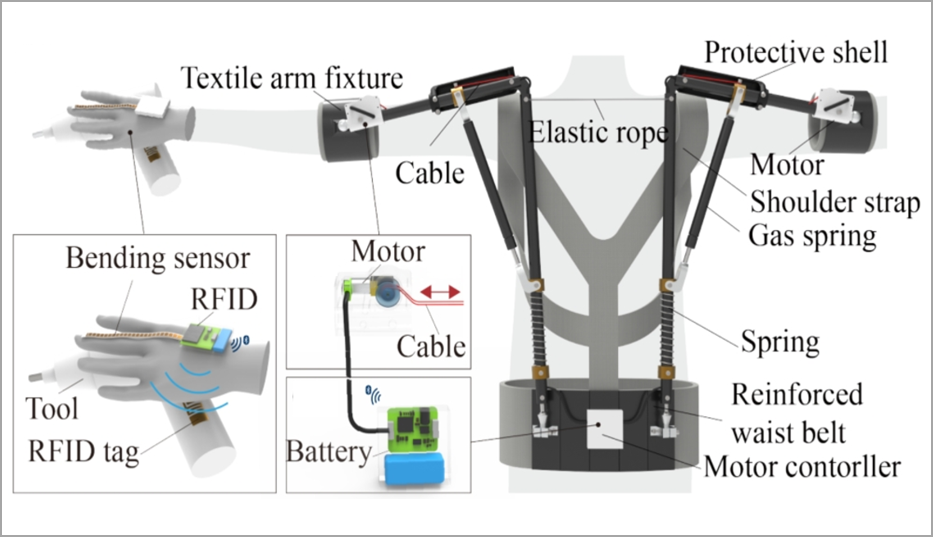
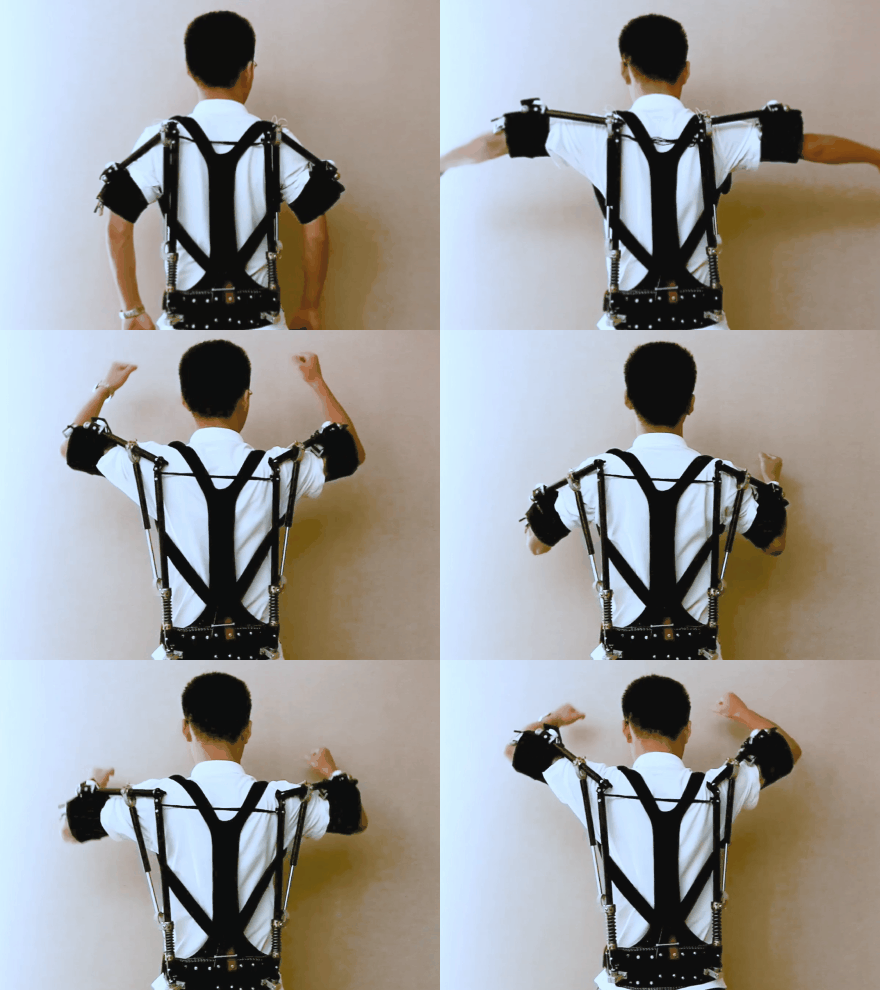
The passive adjustable arm-exoskeleton is designed based on a spring slider model and four-bar-linkage model. It is a lightweight wearable system with a weight of 2 kg and with a feature of easy adjustability.
Based on the AutoStitch framework, the feature matching strategy is developed given the corresponding ROIs since the cameras for surveillance are of constant parameters. Furthermore, seam-based optimization will be implemented to improve the stitching performance of the overlapping area.
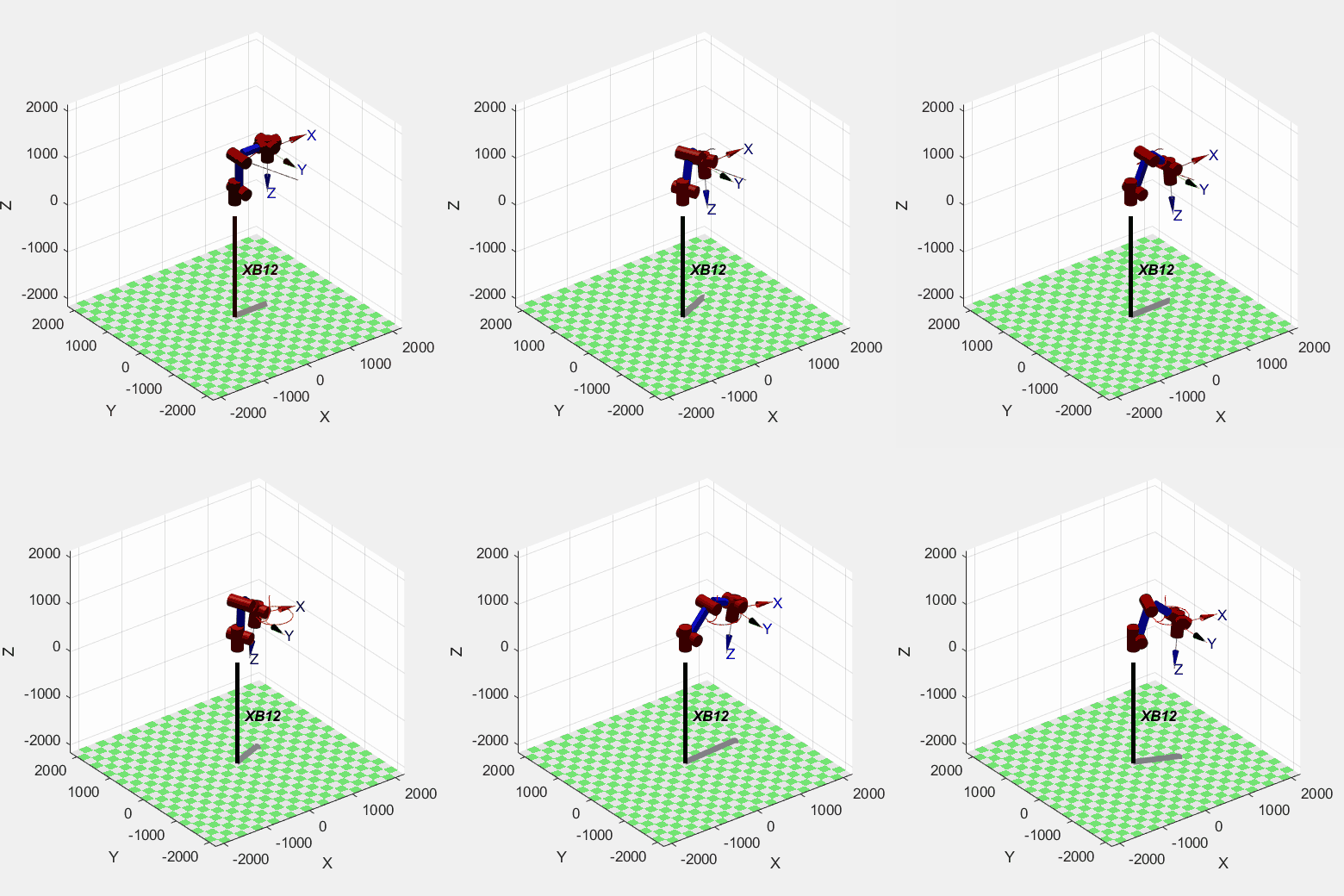
Implemented real-time path following movement based on the PID method and double S profile. The constraint-based PID method can achieve synchronous movement for all joints within dynamics constraints.
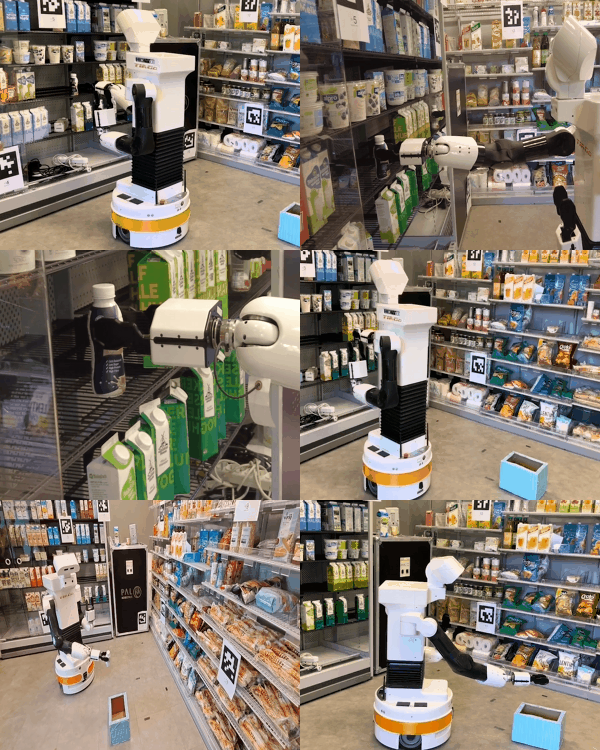
Constructed ROS behavior tree architecture to dynamically adjusts goals and performs items picking/placing in sequence.
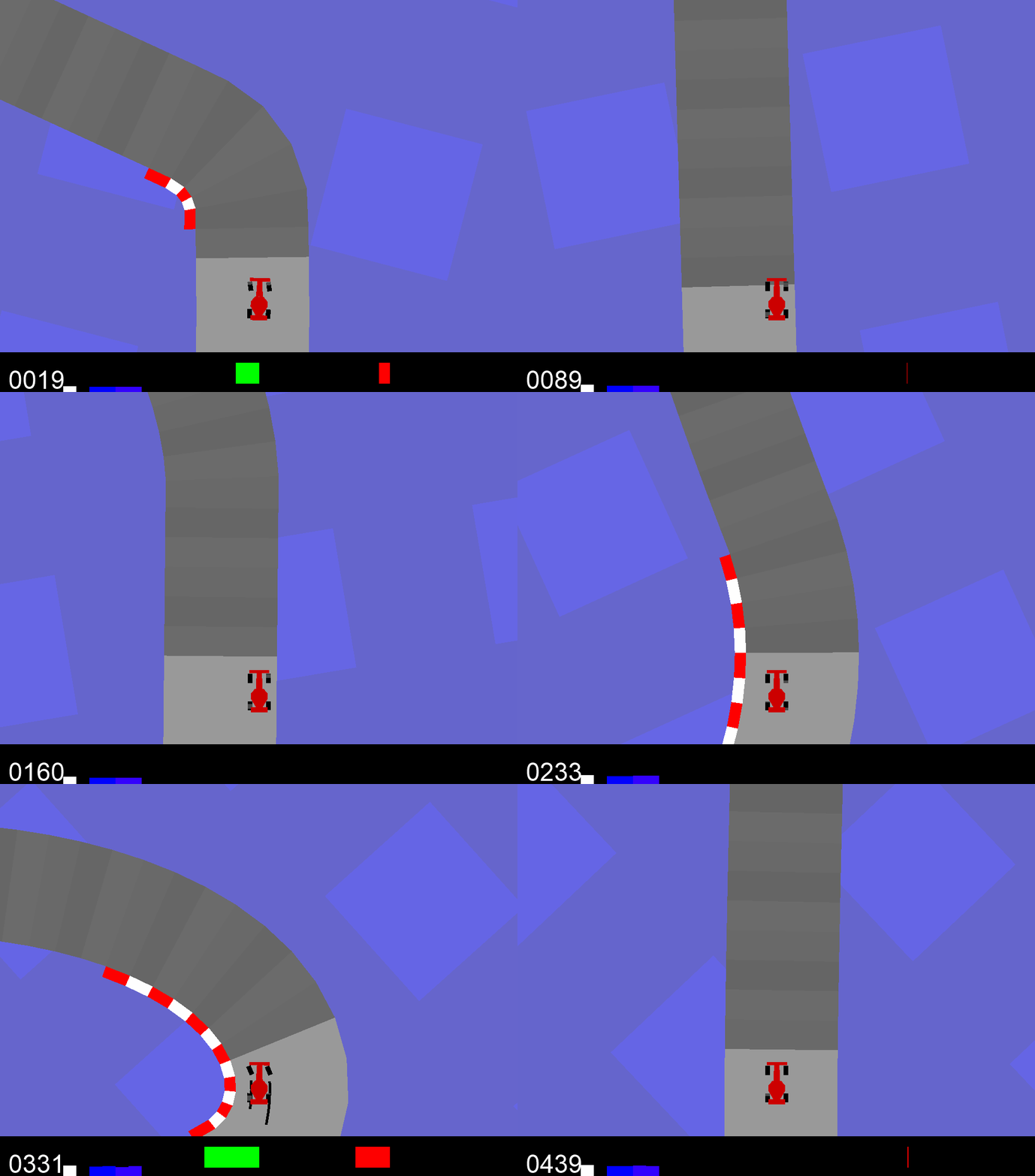
Developed the Random Forest and Convolutional Neural Network models for multi-class classification, which used the current top-view image as input and outputted the control action (accelerate, steer left/right, brake).
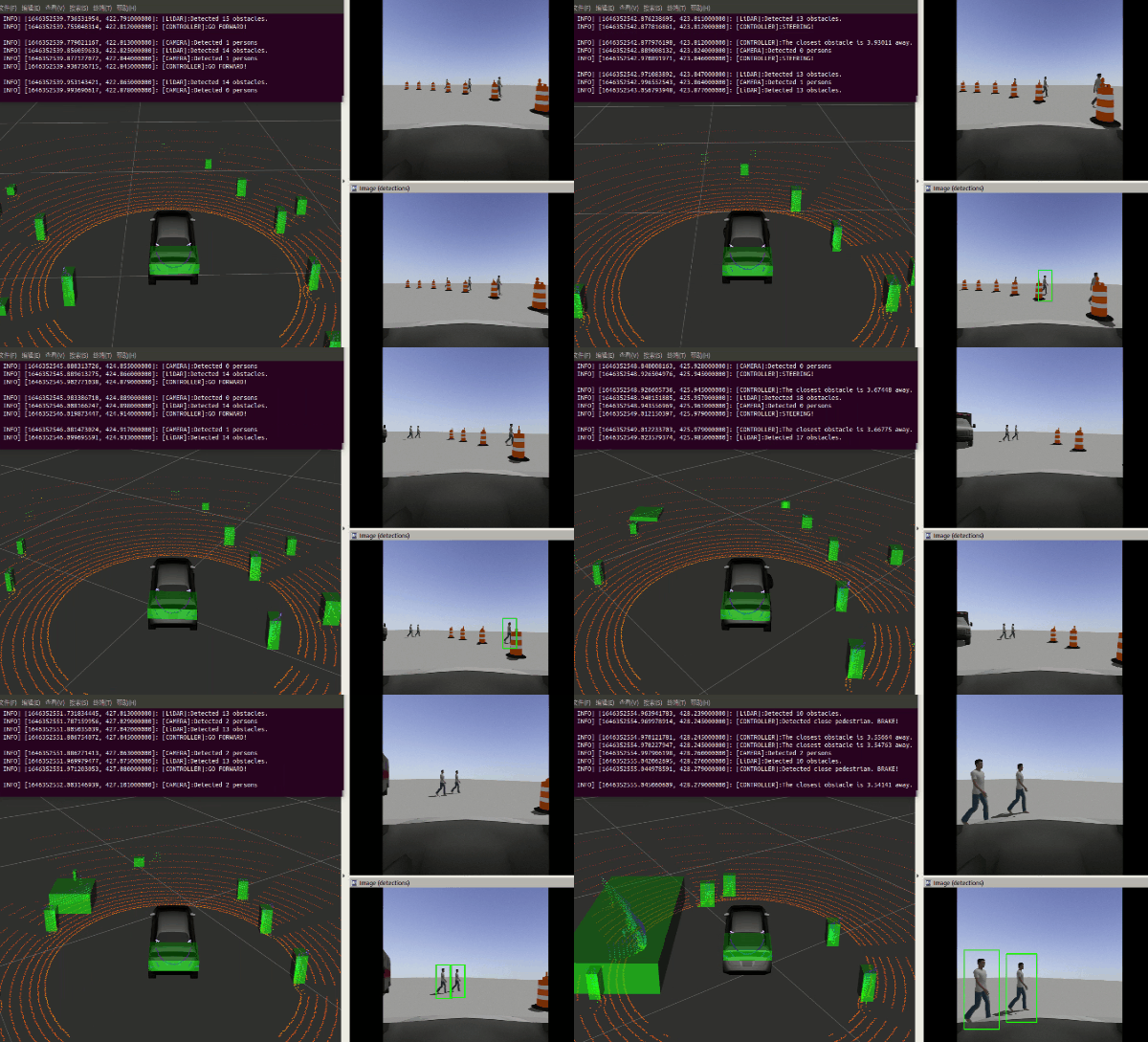
Developed software on ROS to achieve autonomous driving in a simulated test track. Designed ROS nodes to detect obstacles and pedestrians from LiDAR pointclouds and camera images using PCL and OpenCV, and use these detections to generate simple control instructions.
Developed RRT* and k-PRM path planner to generate collision-free path to verify the robustness on 3D random obstacle map. Furthermore, vehicle routing problem will be implemented to achieve path planning for multi-rbots with multiple goals.